

Background
Nottingham Estate has a rich history dating back to 1953 when it commenced operations with cash crops and cattle. Over time, the focus shifted away from cattle due to persistent drought conditions. Initially reliant on diesel pumps for irrigation due to the absence of electricity, the estate saw a significant change in the early 1970s with the introduction of electricity. The transition from cotton to implementing biological control on citrus marked a strategic shift in agricultural practices. With a steadfast commitment to continuous growth and excellence, they are poised to elevate operations and impact further.
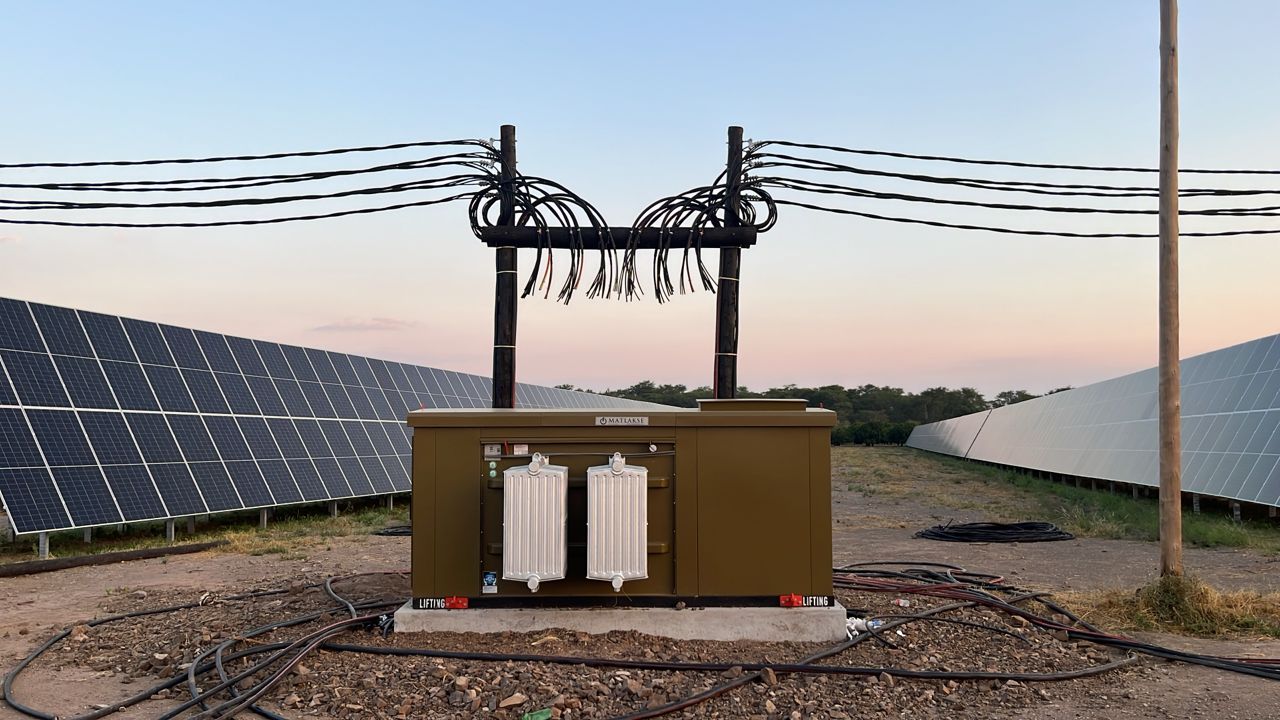
- Bespoke East / West ground mounted structure
- Unique connection and to the existing reticulation network
- Integrated diesel generators
Additional Information
Addressing the perennial water challenge, the construction of Mushiloshokwe Dam in 1995 revolutionized irrigation processes. Recognizing the escalating electricity crisis, the inception of the 1500KW Nottingham Estate Solar Power Station in January 2016 was a pivotal step towards sustainable energy solutions.
The subsequent development of Mpande Dam in 2017 further bolstered water storage capacity for irrigation purposes. Looking ahead to 2024, Nottingham Estate embarked on enhancing its solar energy infrastructure by incorporating an additional 4.5MWp capacity. This expansion, characterized by ground-mounted panels with an East/West orientation and a 200% DC to AC design ratio, significantly augmented operational resilience and ensured a more reliable electricity supply for the estate’s operations.