

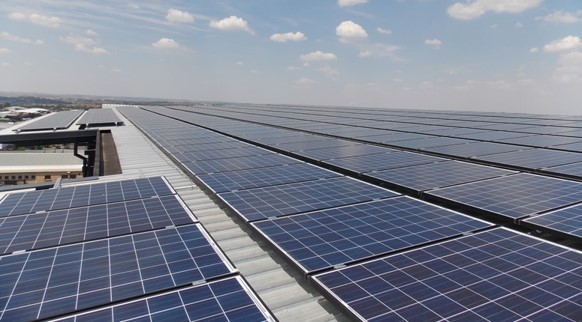
Rooftop Mounted Structure
Suitable for direct installation on rooftops, this solution can be applied to various kinds of roof types, including tiled, metal, flat concrete, etc.
The type & size of the roof dictate the use of different mounting systems, which includes clamps, ballasts, or rail systems, mounting can be tailored to cater for diverse roof pitches & tilt angles, optimizing system performance.
Types of Rooftop Structures
Fixed-tilt systems:
Keep panels at a set, optimal angle for sunlight exposure.
Adjustable systems:
Allow for minor adjustments to the panel angle to adapt to seasonal changes.
Flush mounted systems:
Mounting structure is mounted directly onto the roof sheet material, following the exact contour and pitch.
Keep panels at a set, optimal angle for sunlight exposure.
Adjustable systems:
Allow for minor adjustments to the panel angle to adapt to seasonal changes.
Flush mounted systems:
Mounting structure is mounted directly onto the roof sheet material, following the exact contour and pitch.
Different Types
Ballasted systems:
Used on flat roofs and rely on weight to hold the structure in place.
Penetrating systems:
Used for roofs, like metal ones, that require attachments to penetrate the roof surface for secure mounting.
Orientation/azimuth:
This refers to the direction that the solar panels are facing, in the Southern hemisphere they often face North, but East / West is also an option when incorporated correctly into the design
Used on flat roofs and rely on weight to hold the structure in place.
Penetrating systems:
Used for roofs, like metal ones, that require attachments to penetrate the roof surface for secure mounting.
Orientation/azimuth:
This refers to the direction that the solar panels are facing, in the Southern hemisphere they often face North, but East / West is also an option when incorporated correctly into the design

Maximum Demand
It’s the highest amount of electricity your business uses at any one time, you are charged based on this even if you only hit that point once.
- An energy audit helps you
- Identify your peak demand.
- Understand what’s causing it.
- Take steps to reduce it.
- This one insight has a direct impact on your electricity charges.